
News
Monaco Polar Symposium 2026 Calls for Stronger Cooperation and Governance Ahead of Fifth International Polar Year
Scientists, policymakers, Indigenous representatives and international institutions gathered in Monaco from 25–27 February 2026 for the Monaco Polar Symposium, a high-level forum aimed at strengthening cooperation and translating polar science into concrete action. Held at the Oceanographic Museum of Monaco, the symposium focused on preparing the global scientific community for the Fifth International Polar Year (IPY-5), planned for 2032–2033.
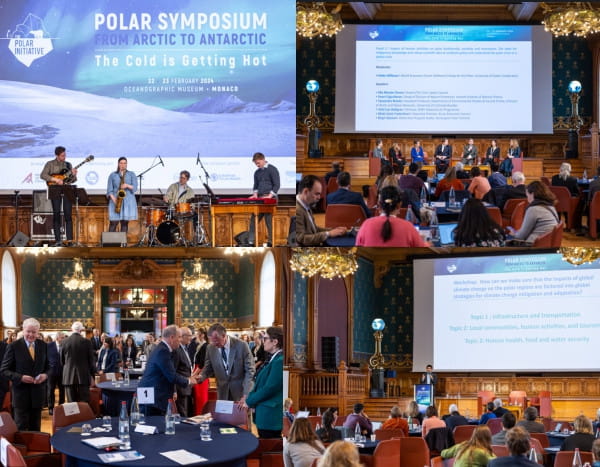 Organised under The Polar Initiative by the Prince Albert II of Monaco Foundation in collaboration with the Scientific Committee on Antarctic Research (SCAR) and the International Arctic Science Committee (IASC), the biennial symposium has become a key international platform linking polar research with policy and governance.
Science, Diplomacy and Cooperation
A central message emerging from the three-day meeting was that the future of polar science will depend not only on research advances but also on governance, trust and international coordination. Participants stressed that science diplomacy will be essential in maintaining collaboration across the Arctic and Antarctic at a time of geopolitical uncertainty.
Discussions highlighted the need for stronger alignment between nations, institutions and research networks to ensure that scientific knowledge can continue to inform global responses to climate change and environmental challenges in the polar regions.
Preparing for the Fifth International Polar Year
Preparations for IPY-5 (2032–2033) were a major focus of the symposium. Participants emphasized that the next International Polar Year must extend beyond a purely scientific milestone. Instead, it should be built on inclusive governance frameworks, bringing together scientific communities, Indigenous knowledge systems, policymakers and society at large.
Among the priorities identified were the development of long-term observing systems, improved coordination among research funders, and stronger data-sharing frameworks. Participants also called for clearer communication strategies linking polar research to societal needs, particularly as changes in the Arctic and Antarctic increasingly affect global climate systems.
From Research to Action
The symposium’s programme was structured around three thematic pillars: international collaboration in times of uncertainty, funding innovation and equity, and transforming research into action through flagship initiatives. Workshops explored how these themes can translate into concrete programmes in the years leading up to IPY-5.
Participants worked on designing flagship initiatives that could guide implementation of new research and monitoring programmes, strengthen the science–policy interface, and create lasting international cooperation frameworks for the polar regions.
A Call to Act Now
Closing the symposium, HSH Prince Albert II of Monaco stressed that preparations for the next International Polar Year must begin immediately.
“The path toward the Fifth International Polar Year begins right now,” he said in his final remarks.
The Monaco Polar Symposium 2026 underscored that safeguarding the polar regions will require coordinated global action, bringing together science, policy, funding institutions and Indigenous communities. As climate change accelerates in the Arctic and Antarctic, the meeting reaffirmed the importance of international collaboration in protecting these regions and the critical role they play in the Earth’s climate system.
Source and photos: The Polar Initiative
The tags below provide an opportunity to view previously posted related news within the selected category