
News
China Launches Regular Arctic Container Service to Europe
China has launched a regular container shipping service to Europe through the Northern Sea Route (NSR), adding a scheduled China–Europe connection to the growing use of Arctic waters for commercial shipping.
The container vessel Dubai Tower departed from Ningbo on 15 August and is travelling north towards the Bering Strait before continuing west along Russia’s Arctic coast, with arrival in Felixstowe in the United Kingdom scheduled for 7 September, followed by stops in Hamburg, Germany, and Gdynia, Poland.
The service follows a pilot voyage in 2025 and is planned as a seasonal operation, with Sea Legend scheduling several Arctic voyages during the 2026 navigation season when ice conditions allow navigation.
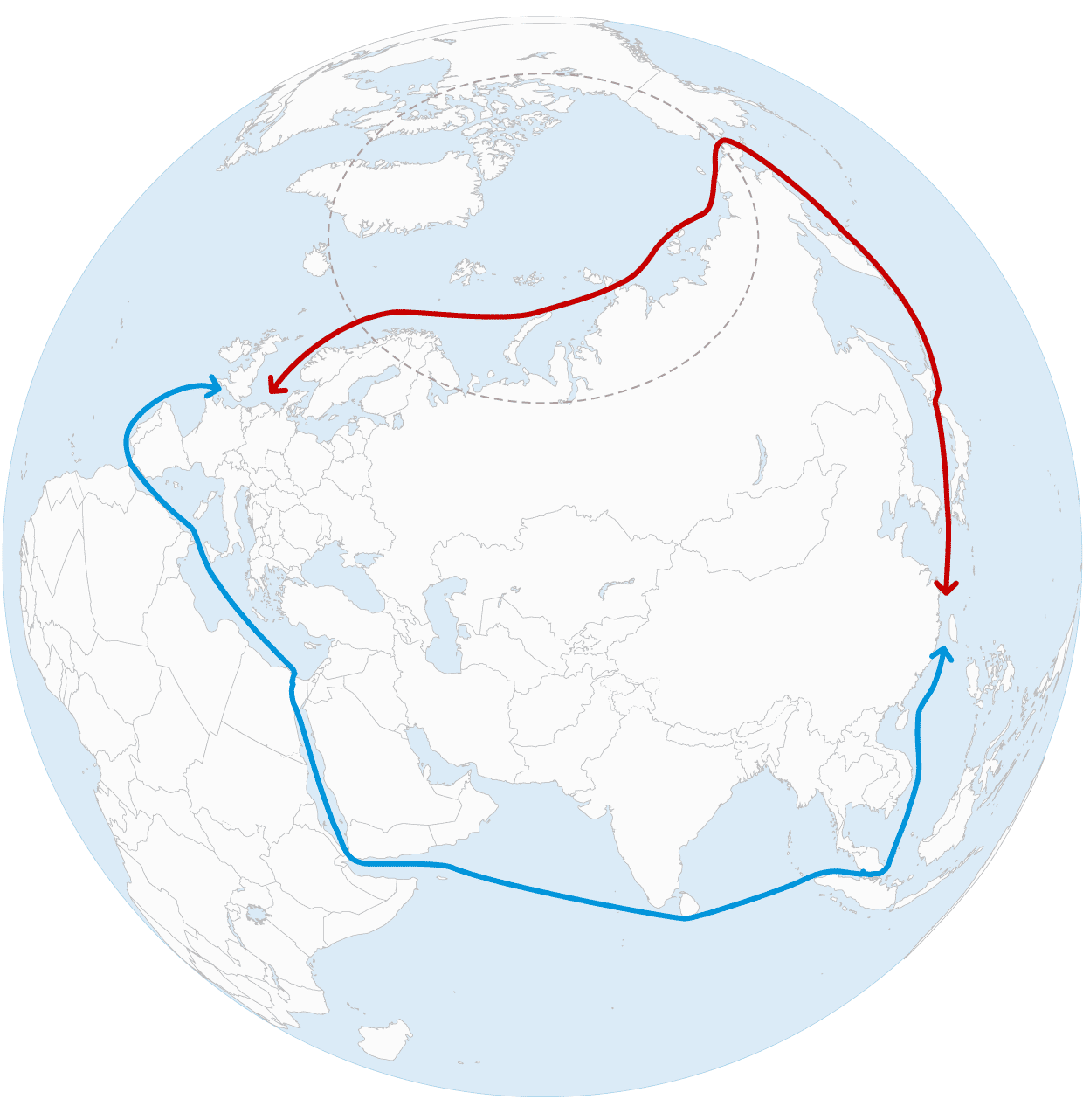
A shorter connection between China and Europe
The Northern Sea Route runs from the Bering Strait along Russia’s northern coast towards the Barents Sea, providing a shorter connection between China and northern Europe than routes through the Suez Canal. The journey from Ningbo to Felixstowe can take around 18–20 days, compared with more than 40 days through Suez, while other estimates for China–Europe routes indicate travel times of about 23–25 days through the Arctic compared with 38–45 days through the traditional route.
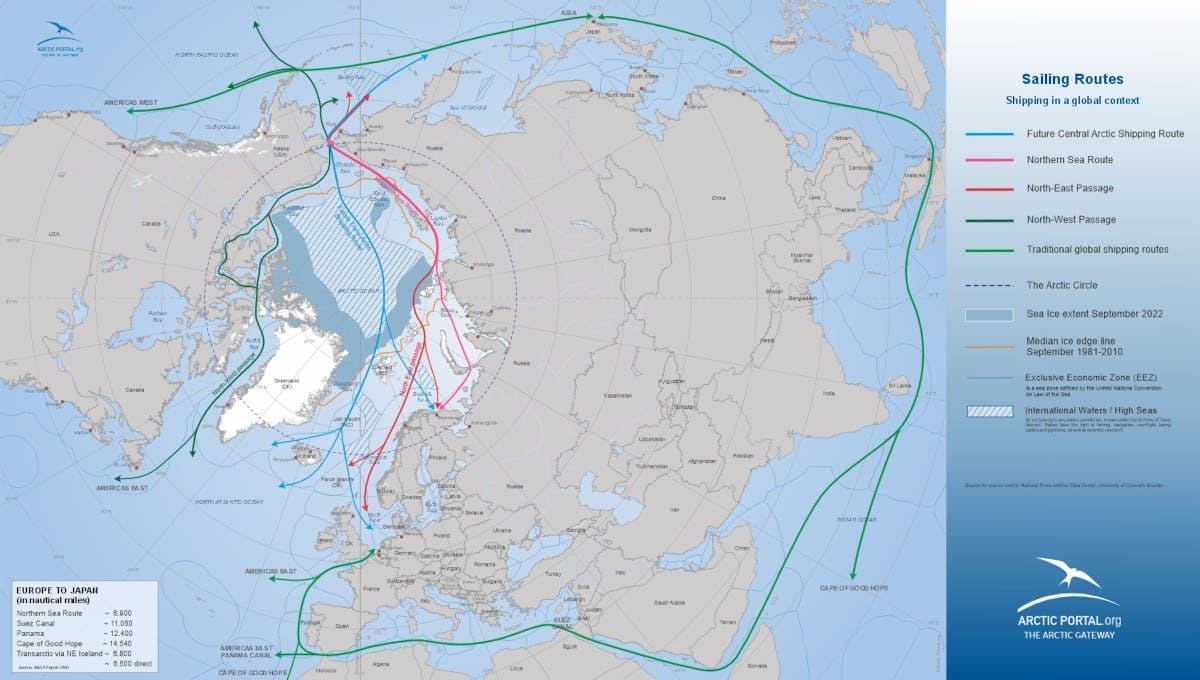
The service also provides an alternative to routes affected by instability in the Middle East and disruptions around the Red Sea and Strait of Hormuz. Commercial vessels have used the Northern Sea Route for individual voyages and trial shipments for years, including a container transit completed by Maersk in 2018, while the number of container ships using the route increased from 15 in 2024 to 23 in 2025. The current service differs from these previous transits because it is designed as a regular, scheduled connection between China and Europe.
Seasonal opportunities and operational limits
The NSR remains a seasonal shipping corridor, with navigation depending on sea-ice conditions, weather and vessel capability. Reduced summer sea ice has extended the period in which ships can operate along parts of the route, although Arctic navigation continues to face operational challenges linked to changing conditions.
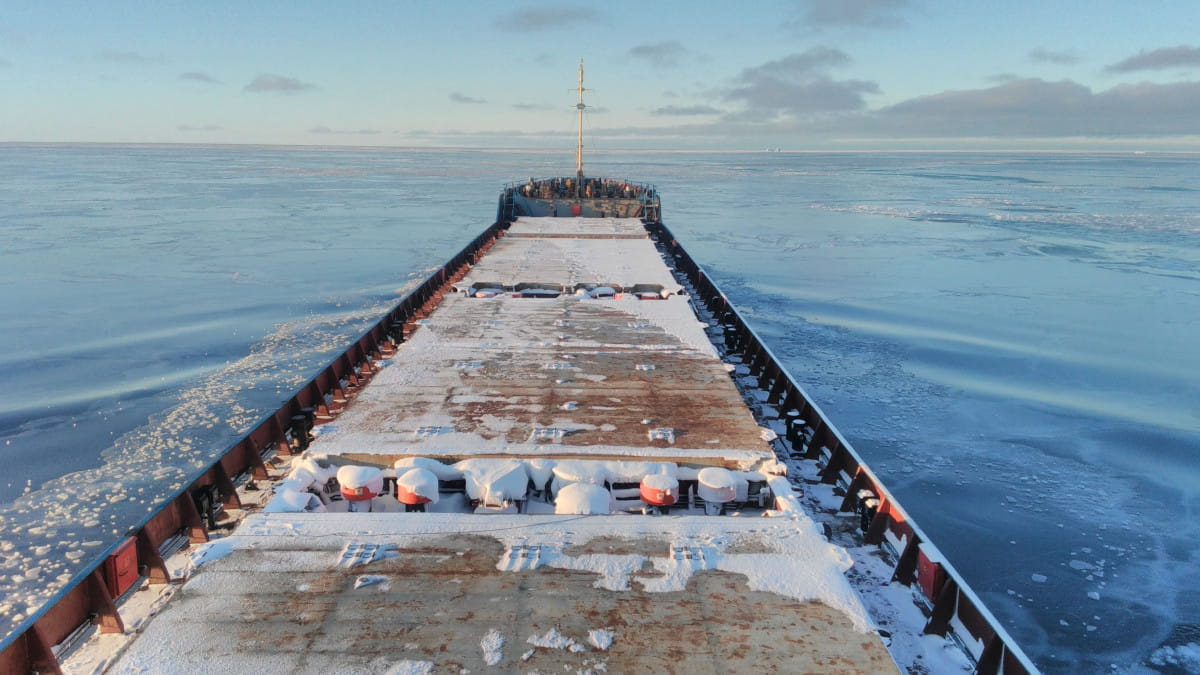
Limited infrastructure, long distances, high operating costs, insurance requirements and access to emergency response remain important constraints, while Russia’s state nuclear company Rosatom oversees navigation permits along the NSR and provides icebreaker support when required. These conditions mean that the route is not considered a replacement for established corridors such as the Suez Canal, but it could provide an additional option for some cargo moving between Asia and Europe, including vehicles, batteries, solar equipment and other time-sensitive goods.
Environmental concerns
The expansion of Arctic shipping also raises environmental concerns, with environmental organisations warning that increased vessel traffic could expose Arctic ecosystems to greater risks from oil spills, pollution and black-carbon emissions. Black carbon deposited on snow and ice reduces surface reflectivity and increases the absorption of solar radiation, while oil spills present another challenge because cold conditions can slow decomposition and the remoteness of much of the NSR can make emergency response difficult.
Several major shipping companies, including CMA CGM, MSC and Hapag-Lloyd, have pledged to avoid Arctic trans-shipment routes.
China’s growing interest in Arctic shipping
The new service forms part of China’s long-term interest in Arctic transport connections, with China and Russia discussing the development of Arctic shipping routes under the concept of a “Polar Silk Road”. For China, the NSR provides another transport option and connection to European markets alongside established maritime routes, while for Russia, increased traffic supports plans to develop the Northern Sea Route and Arctic infrastructure.
The 2026 navigation season will provide a test of whether scheduled container services can operate on the route while facing its seasonal, environmental, economic and geopolitical constraints.
Source: The Guardian, EurasiaBusinessnews, France24
The tags below provide an opportunity to view previously posted related news within the selected category