
News
Iceland Votes Against Resuming EU Accession Talks
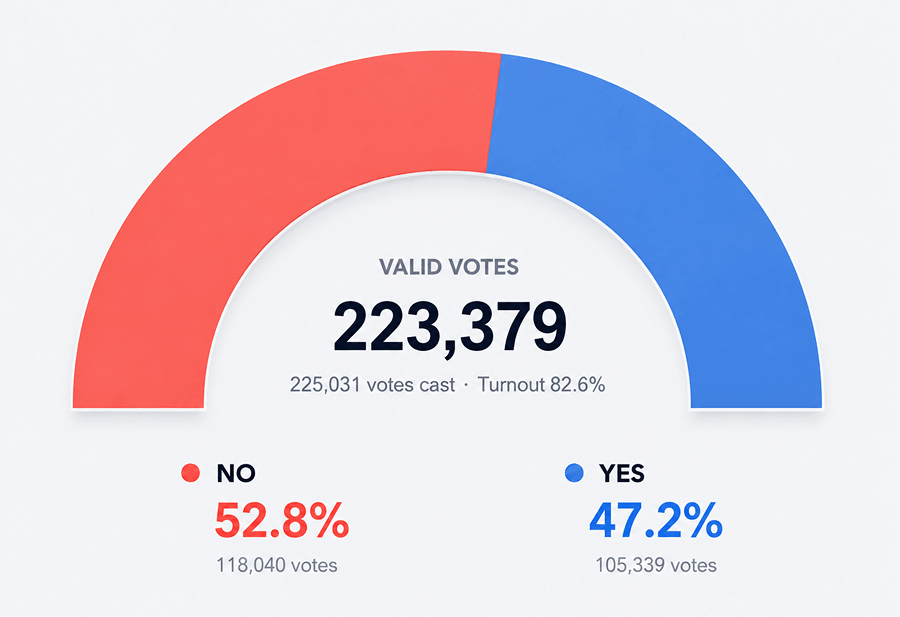
Icelanders have said No to reopening EU accession talks. In a closely contested referendum, 52.8% voted against restarting negotiations and 47.2% voted in favour.
The result leaves Iceland outside the European Union for now, while showing how divided the country remains over its future relationship with the bloc. Fishing, sovereignty and economic ties with Europe were among the main issues in the debate.
Source: BBC and RÚV. Graphic: Arctic Portal.
A total of 225,031 votes were cast. Of these, 118,040 people voted No and 105,399 voted Yes, while 1,652 ballots were blank or invalid. Turnout reached 82.5%, higher than the 80.18% recorded in Iceland’s 2024 parliamentary election. Voters were asked: “Should Iceland resume accession negotiations with the European Union?” The referendum was not a direct vote on EU membership. A Yes result would only have reopened the accession negotiations, and any final agreement on joining the EU would have required a further decision.
Iceland first applied for EU membership in 2009, following the financial crisis. Accession negotiations opened in 2010, but the process was put on hold after a Eurosceptic government came to power in 2013.
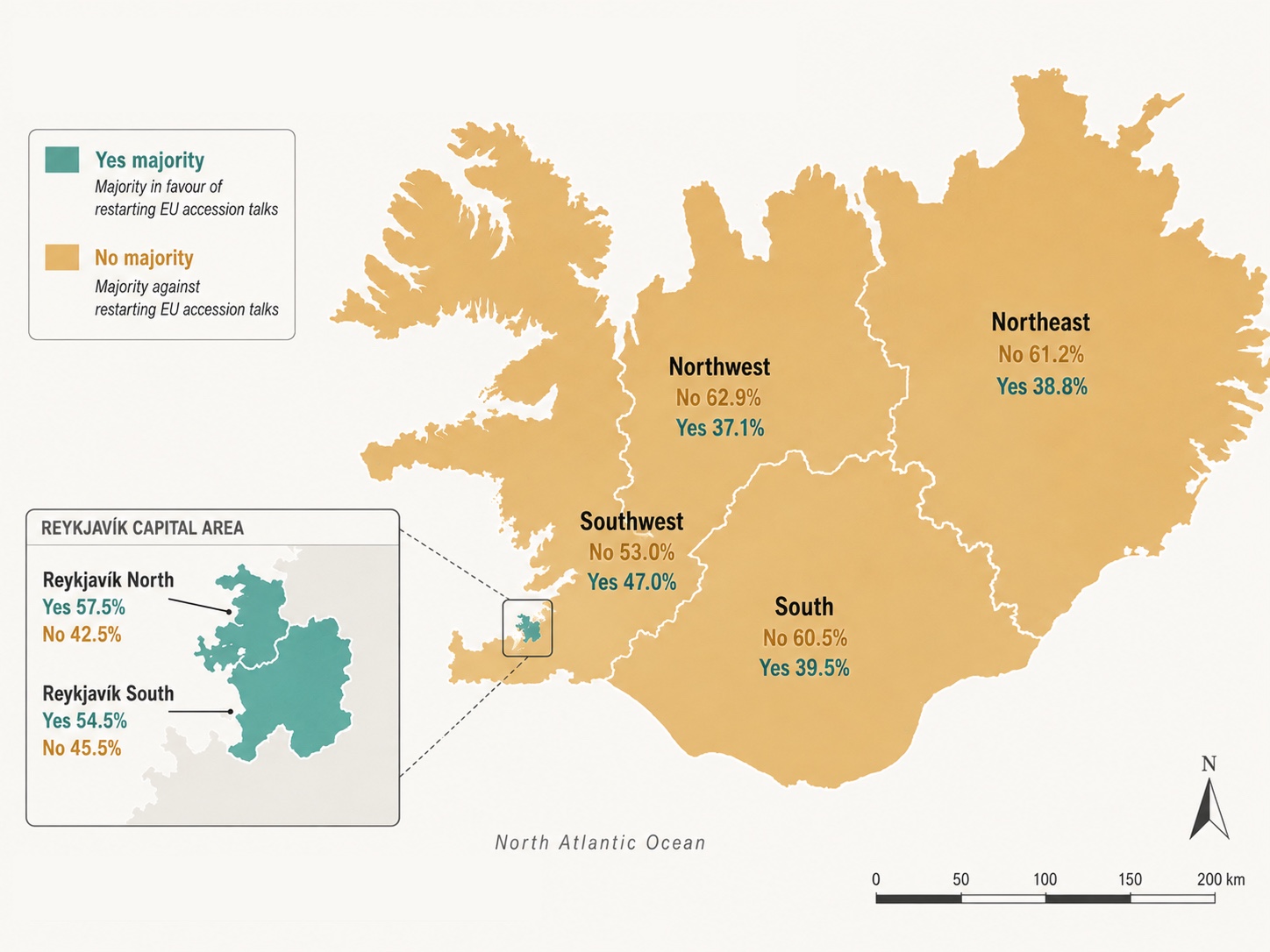
The referendum also revealed a clear geographical divide:
Map: Arctic Portal
The country has six constituencies, and only the two Reykjavík constituencies voted in favour of restarting the talks. In Reykjavík North, 57.5% voted Yes and 42.5% No, while in Reykjavík South, 54.5% voted Yes and 45.5% No.
Outside the capital, every constituency returned a No majority. Opposition was strongest in the Northwest, where 62.9% voted No and 37.1% Yes. In the Northeast, 61.2% voted No and 38.8% Yes, while in the South, 60.5% voted No and 39.5% Yes. The closest result outside Reykjavík came from the Southwest constituency, where 53.0% voted No and 47.0% Yes.
The results therefore show a clear contrast between the capital and the rest of the country. Support for reopening negotiations was concentrated in Reykjavík, while the No vote was stronger in rural and coastal constituencies. Fisheries were a major part of the campaign, particularly outside the capital, where the fishing industry plays a larger role in employment and local economies.
Fishing remained one of the main issues
Fishing rights played an important role in the campaign. Iceland’s fisheries and marine industries account for almost 40% of the country’s exports. Many people who voted No were concerned that EU membership could reduce Iceland’s control over its fishing grounds under EU rules.
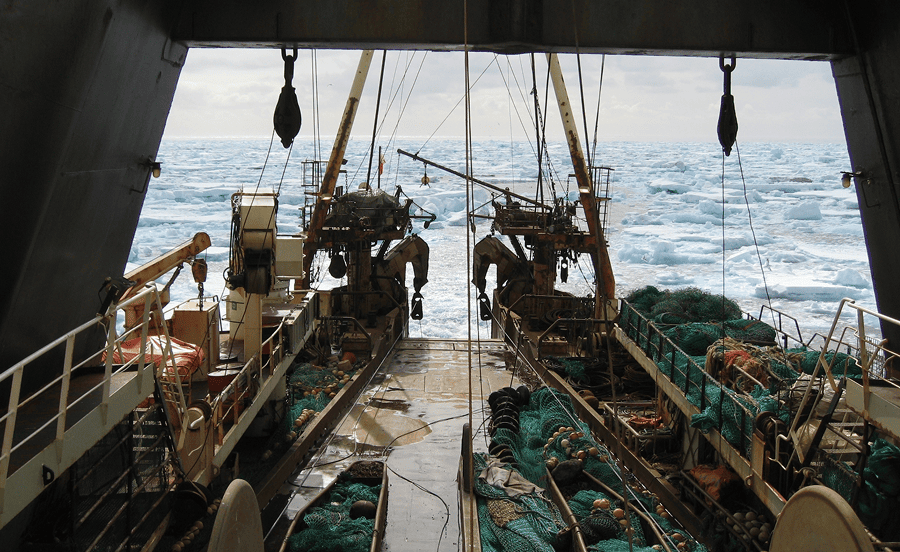
Photo: Arctic Portal
The country fought to protect control over its fishing waters during the Cod Wars with the United Kingdom, a series of disputes that reinforced the importance of national control over marine resources. This history still shapes the debate today, especially when questions arise about how much authority Iceland could retain over its fisheries under EU rules.
The referendum also revealed a clear geographical divide. Support for restarting accession talks was stronger in Reykjavík, while the No vote was stronger in rural areas. This difference reflects the greater importance of fishing and marine industries in many communities outside the capital, where concerns about access to fishing grounds and control over natural resources played a larger role in the campaign.
Iceland will continue to work closely with Europe
Iceland remains closely connected to the European Union through the European Economic Area, or EEA, and the Schengen Area. Prime Minister Kristrún Frostadóttir said after the vote that the government would respect the result and that the question of EU membership would not be raised again during its current term.
Foreign Minister and Viðreisn leader Þorgerður Katrín Gunnarsdóttir, who supported restarting the talks, said the referendum fulfilled the government’s promise to let the public decide. After the vote, political leaders also spoke about the importance of the EEA Agreement and Iceland’s cooperation with European and other partner countries.
Security was part of the discussion as well. Iceland is a founding member of NATO but has no standing military. Recent developments in the Arctic, Russia’s increased maritime activity and tensions around Greenland have also raised questions about Iceland’s position in the region. The result means that EU accession talks will not restart for now. Iceland will continue its cooperation with Europe through the EEA, NATO and bilateral agreements.
Sources: RÚV, BBC, Europe News
The tags below provide an opportunity to view previously posted related news within the selected category