
News
South Korean ship completes Arctic trade voyage
The PanStar Acro has returned to Busan after a 50-day voyage. South Korean authorities hope to introduce regular Arctic shipping services by 2030, but commercial and political challenges remain.
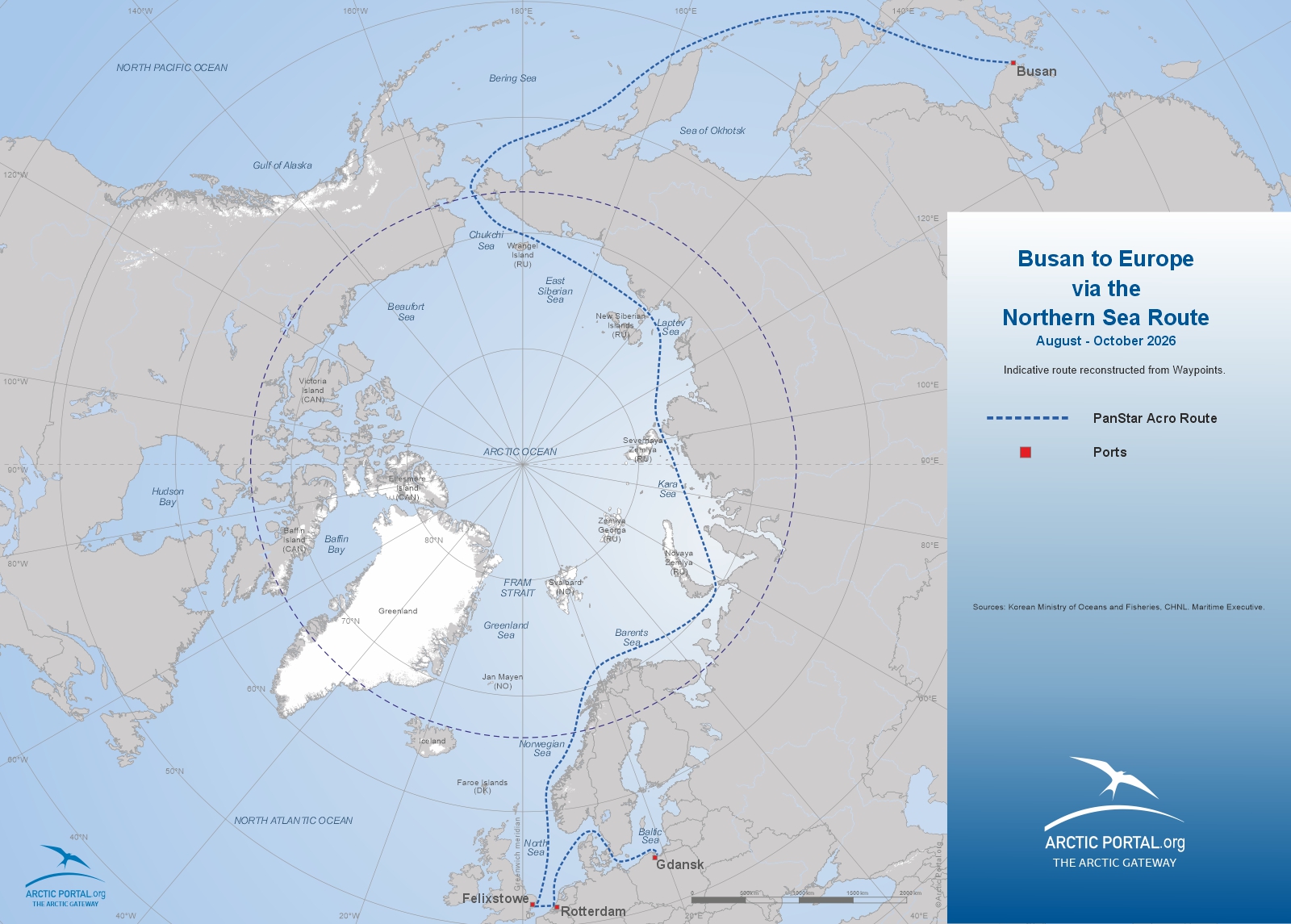
South Korea has completed its first commercial round trip to Europe through the Arctic, according to Reuters. The container ship PanStar Acro returned to Busan on 11 October, 50 days after departing on 22 August.
The journey took the vessel through Arctic waters to Felixstowe in the United Kingdom, followed by stops in Rotterdam and Gdansk. It then returned to South Korea through the Arctic.
For South Korean authorities, the route offers a potential way to shorten shipping times and strengthen Busan’s role as a global maritime hub. They estimate that Arctic voyages could reduce typical journey times by around a third. President Lee Jae Myung has made Arctic shipping a priority, with officials hoping to launch regular services by 2030.
From a trial voyage to a regular service
Turning the completed voyage into a regular commercial service will depend on how much cargo the route can attract and how reliably ships can operate. Before departure, PanStar told Reuters it was seeking around 1,300 TEU of cargo, a unit based on a standard twenty-foot shipping container, but the vessel sailed with 737 TEU of cargo, alongside empty containers. Shorter journey times alone will therefore not determine the route’s commercial value. Industry experts cited by Reuters also highlighted the importance of reliable schedules and the costs associated with slowing down to avoid ice, special insurance premiums and additional fuel use.
A route with political complications
Alongside these commercial challenges, the voyage highlights the political considerations shaping interest in Arctic shipping. Ahead of the departure, PanStar pointed to uncertainty surrounding the Suez Canal route, linked to the Red Sea crisis and geopolitical risks, as a reason to explore an alternative connection between Asia and Europe, according to The Maritime Executive.
However, the Arctic route also raises diplomatic questions, as it follows Russia’s northern coast. Seoul consulted Moscow ahead of the voyage about possible assistance if the ship encountered difficulties, such as becoming trapped in ice. According to Reuters, this cooperation could create friction with Western allies seeking to keep Russia isolated during its war in Ukraine, adding a political challenge to South Korea’s plans to introduce regular Arctic shipping services by 2030.
Source: Reuters, Maritime Executive
The tags below provide an opportunity to view previously posted related news within the selected category